Pendant Light Buying Guide

Pendant lights do more work in a New Zealand home than almost any other fitting. This guide breaks the range into six practical categories, so you can match the fitting to the job it needs to do, rather than choosing on looks alone.

Shop the Range

Shop by Collection

Single Pendants

A single light pendant is one fitting, one drop, one globe. It is the simplest form a pendant can take, and that simplicity is exactly why it is the most flexible option in the whole range.

It works on its own above a bedside table or in a small hallway, and it also works in twos or threes spaced evenly along a kitchen island or dining table when you want repetition rather than a cluster.

Multi Pendants

A multi light pendant is a single fitting with several globes built into it, all suspended from one canopy on the ceiling. Think of it as the middle ground between a single pendant and a full chandelier.

The Lana 3 Light Pendant,is a good reference point. Useful anywhere you need more output than a single fitting gives, without moving up to a full chandelier

Linear Pendants

A linear pendant is a long, narrow fitting designed to run parallel to whatever sits beneath it, most commonly a kitchen island, a long dining table, or a breakfast bar. Instead of a single point of light,

it spreads even illumination along the full length of the surface below, which is why it has become the go-to choice for modern kitchen renovations in New Zealand.

Stairwell Pendants

Stairwell lighting is one of the trickiest jobs in a home, because the pendant needs to light a vertical space safely and look proportionate from every level it is visible from.

A stairwell pendant is typically a long drop fitting, sometimes with a rise and fall mechanism, hanging through a double height void beside a staircase.

Luxury Pendants

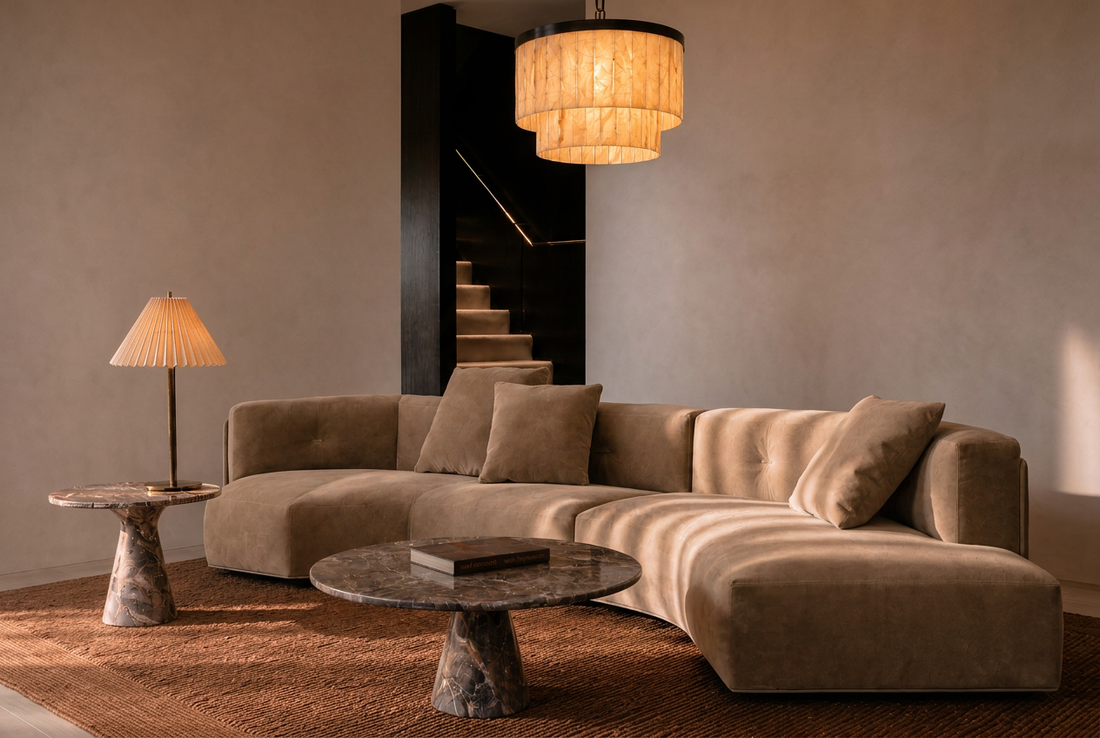
Luxury pendants sit at the top of the range, built around premium materials such as travertine, brass, and hand finished glass, and designed to be the centrepiece of a room rather than one part of a broader lighting plan. The Maliosa 8 Light Silver & Brown Travertine Pendant and the Boleto 9 Light Pendant, in black with clear glass or brass with amber glass, are good examples: multiple light sources, substantial scale, and materials chosen for how they age and catch light.

Clustered Pendants

Why Clustering Pendant Lights Works

A single pendant over a wide dining table or kitchen island often looks a bit lost, especially in the open plan living spaces common in New Zealand homes. Clustering fixes this by spreading light and visual weight across the whole area, instead of leaving one bright spot in the middle of an otherwise dark ceiling. The logic is straightforward: your lighting needs to match the scale of the surface underneath it. A six seat dining table needs more coverage than a single pendant can give, so three pendants in a row, or a loose cluster at varying heights, fill that gap without needing one oversized fitting that ends up dominating the room.

Clustering also brings the ceiling into the design. Ceilings are often the most forgotten surface in a home, flat and plain with nothing to catch the eye. A cluster of pendant lights breaks that flatness up, giving the room a sense of being properly finished rather than an afterthought.

Varying the Drop Height

One of the most effective hanging concepts for pendant lighting is varying the drop height within a cluster, rather than hanging every fitting at the same level. Three pendants dropped at slightly different heights, for example around 10 centimetres apart, catch the eye in a way a flat row never will, because the height difference creates depth even when the lights are switched off. This works especially well with a design like the Lighting Direct Aria pendant range, where a staggered drop shows off the individual form of each shade instead of letting them blur into one flat line.

There's a functional reason behind varying height too. A slightly lower pendant directly over the centre of the table gives focused task light for dining, while pendants hung a touch higher on either side spread ambient light further across the room without causing glare at eye level. Get this balance right and the fitting does two jobs at once, task lighting and ambient lighting, rather than just one.

Layered Lighting: Explained


Layering your lighting means combining ambient, task and accent light in the same room, rather than relying on a single central fitting. Each layer does a different job, and together they let you control both mood and function. A room lit by one overhead light alone tends to feel flat, whereas a layered plan gives you soft, even light to relax in and brighter, focused light where you actually need it, whether that's the kitchen bench, a reading chair or a favourite piece of art.

Ambient Lighting

Ambient lighting is the foundation layer. It fills the room with a soft, even glow rather than throwing light and shadow into just one spot, which is what gives a space that warm, welcoming feel instead of a harsh, clinical one. Ceiling fittings, downlights and pendants usually carry this layer. In living areas and bedrooms, a warm colour temperature around 2700K works best for a relaxed, comfortable atmosphere.

Task Lighting

Task lighting brightens the specific areas where you're doing something that needs focus, such as cooking, reading or working at a desk. Rather than lighting the whole room to see one small area clearly, task lighting puts brighter, often cooler light exactly where the activity happens, around 4000K works well in kitchens and workspaces, giving you the control to light only what's needed.

Accent Lighting

Accent lighting draws attention to specific features, such as artwork, a feature wall or an architectural detail. It's usually the brightest of the three layers at its focal point, which is what makes it stand out and gives the room a sense of depth rather than everything sitting at the same flat brightness. Spotlights, track lighting and picture lights are common choices for this layer.


Used together, these three layers let you shape a room for whatever it's being used for at the time, from a bright, functional space during the day to a calm, moodier one in the evening.

Quick Reference: Hanging Height by Room

The category tells you which pendant to shop. This is the number to have ready once you know which one you're hanging, and where.

Kitchen Island

700–850mm

Above Surface

Above the benchtop, not the floor. Measure from where the pendant's base will sit down to the surface below.

Dining Table

700–800mm

Above Surface

Sits just above eyeline across the table, so it lights the surface without anyone staring straight into the globe.

Bedroom

350–600mm

Above Surface

Measured above the bedside table. As a floor guide, the base of the pendant typically sits around 2.1m up.

Entrance

2.0m+

From Floor

This is a minimum, not a target, measured from the floor to give full walking clearance anywhere people pass underneath. A lower, more decorative pendant only works over a console table or in a foyer that's out of the walking path; if the ceiling can't give you 2.0m of clearance in a true walkway, use a close to ceiling fitting instead.

Frequently Asked Questions

What's the difference between a pendant light and a chandelier?

A pendant typically hangs from a single point with one light source, while a chandelier branches into multiple arms from a central mount. In practice the line has blurred, since multi-light clusters and branching pendant designs have become common. As a rule of thumb, treat any single-drop fitting as a pendant and any branching, multi-arm fitting as a chandelier when comparing products.

How is a pendant light installed?

Installing a pendant means connecting it to an existing ceiling wiring point, or having a new one put in, and both involve work on your home's electrical system. In New Zealand, this has to be done by a licensed electrician, in line with wiring regulations, both for safety and because unlicensed work can affect your home insurance.

Can you adjust the height of a pendant light?

Many pendants have an adjustable cord or cable that lets you set the drop during installation, and some use a rise and fall mechanism that lets you change the height afterwards too. If your stud height is unusual, or you are retrofitting into an existing ceiling point, look for a pendant with an adjustable suspension length and check the maximum drop listed on the product page.

Are all pendant lights dimmable?

Not automatically. Whether a pendant dims depends on both the fitting and the globe or LED driver inside it, and the two need to be compatible with a dimmer switch for it to work. Check the product listing before you buy if dimming matters to you, and ask your electrician to confirm the right dimmer switch for your home's wiring.

What is a pendant light?

A pendant light is a fitting that hangs from the ceiling on a cord, cable, or rod, rather than sitting flush against it. Because it hangs lower than a flush or semi-flush light, it directs light more precisely and can work as both a functional light source and a decorative feature in the room.

Our Top Picks

Boleto 5 Light Pendant Brass with Amber Glass

Boleto 5 Light Pendant Brass with Amber Glass

Boleto 5 Light Pendant Brass with Amber Glass

$1,289.90
Sale price  $1,289.90 Regular price 
Maliosa 1.5m 8 Light Silver & Brown Travertine Pendant Bronze

Maliosa 1.5m 8 Light Silver & Brown Travertine Pendant Bronze

Maliosa 1.5m 8 Light Silver & Brown Travertine Pendant Bronze

$967.40
Sale price  $967.40 Regular price  $1,289.90
Lana 3 Light Pendant Bronze

Lana 3 Light Pendant Bronze

Lana 3 Light Pendant Bronze

$179.95
Sale price  $179.95 Regular price  $239.90
Cardini 1 Light Pendant Bronze with Natural Shade

Cardini 1 Light Pendant Bronze with Natural Shade

Cardini 1 Light Pendant Bronze with Natural Shade

$321.95
Sale price  $321.95 Regular price  $459.90
Marmont 10 Light Alabaster Pendant Bronze

Marmont 10 Light Alabaster Pendant Bronze

Marmont 10 Light Alabaster Pendant Bronze

$1,579.90
Sale price  $1,579.90 Regular price 

Still deciding?

Pop into your nearest Lighting Direct showroom or get in touch, our team will talk through your room and point you at the right range.

no appointment needed.

FIND YOUR NEAREST BRANCH