Outdoor Lighting Buying Guide

From path lights and spike spotlights to inground fittings and full app control, this guide walks through choosing, powering, and placing 24V outdoor lighting the right way, so your garden looks as good after dark as it does in daylight.

Why choose low-voltage garden lighting?

The right outdoor lighting changes how your home and garden feel after dark. A low-voltage system is the easiest way to add lighting to a path, a deck, or a favourite tree, because a transformer steps mains power down from 240V to a safe 24V before it reaches your lights.

That is the reasoning behind it. Low-voltage lighting is safe to handle, simple to extend, and flexible enough to grow with your garden over time, one fitting at a time.

Types of outdoor lights

Combining a few different fittings almost always looks better than relying on one bright light. Here is what each type does best, and why it earns its place in the garden.

Black textured finish bollard

Path & step lights


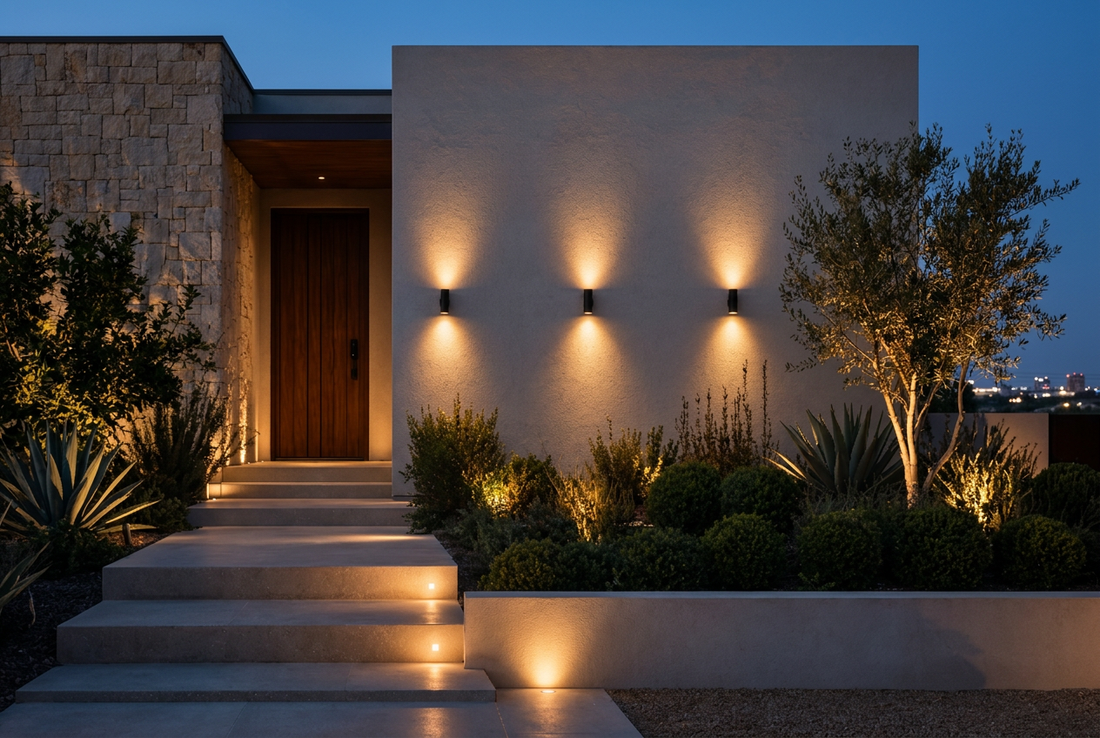
Sitting low, these mark where the ground changes rather than lighting the whole garden. Path lights show a walkway's edge; step lights sit at each riser, since trips usually come from misjudging a step's height, not missing it. Space fittings so light pools just meet, avoiding dark gaps. Constant exposure to foot traffic and rain means IP65 or higher is standard, and 24V keeps things safe.

Spike spotlights


A spike sits on a ground stake, pushed into a bed and aimed by hand, the most flexible fitting in the garden. Point it up a tree trunk for uplight, or angle it toward a wall for a softer wash. Aim away from windows and seating to avoid glare. Freestanding and DIY-friendly, spikes are the easiest fitting to reposition as the garden changes.

Inground & deck lights


These sit flush with decking or paving, so there's no visible fixture, only a soft upward glow from the material itself. They suit a deck edge, step change, or driveway boundary. Because they're walked on and exposed to pooling water, IP65 or higher is essential, and the cutout needs to be level and correctly sized before the surface goes back down. Use sparingly to avoid a runway effect.

Our Top Picks

Masson 14W 45D 3000K IP65 Spike Black

Masson 14W 45D 3000K IP65 Spike Black

Masson 14W 45D 3000K IP65 Spike Black

$159.90
Sale price  $159.90 Regular price  $199.90
Laguna IP65 Flood Light with Sensor Black

Laguna IP65 Flood Light with Sensor Black

Laguna IP65 Flood Light with Sensor Black

$209.90
Sale price  $209.90 Regular price 
Luna IP65 12W 600mm Bollard Black

Luna IP65 12W 600mm Bollard Black

Luna IP65 12W 600mm Bollard Black

$202.45
Sale price  $202.45 Regular price  $269.90
Chameleon Inground RGBW Black

Chameleon Inground RGBW Black

Chameleon Inground RGBW Black

$84.95
Sale price  $84.95 Regular price  $169.90

Choosing between 24v and 12v

Most garden lighting runs on one of two safe, low-voltage systems. The right one comes down to the size of the job, and how far the furthest light sits from the transformer.

12 Volt

The lighter-duty option, common in smaller DIY garden light kits. It draws more current for the same wattage, so voltage loss builds up faster over distance, which is why runs are best kept short, roughly 10 to 15 metres from the transformer to the furthest light. A good fit for small courtyards, planter beds, and paths that sit close to the power source. legacy technology

24 Volt

The standard across Lighting Direct's spike, inground, and ribbon range. Drawing half the current of 12V for the same wattage means voltage loss over distance is much lower, so runs can comfortably stretch to around 25 metres before it shows. Better suited to larger gardens, multiple lighting zones, or a transformer that sits some way from the furthest fitting.

Voltage Drop

Think of electricity moving through a cable the way water moves through a hose.

The further it travels, the more it loses along the way. That loss is why lights at the far end of a long run can look dimmer than the ones near the transformer. Drag the controls below to see it happen.

Voltage Drop

At 24V the run can stretch further than 12V before it shows. Pull it out past about 25 metres and watch the far light dim.

24V

The 80% Rule

Only load a transformer to about 80% of its rated capacity, so every light on the run performs evenly.

80% 60VA 0VA

IP ratings for exterior lighting

Every outdoor light fitting has an IP, or Ingress Protection, rating. The first digit shows how well the fitting is protected against dust and solid objects, while the second shows its protection against water.

For outdoor lights directly exposed to rain and weather, IP65 is a strong choice, providing a high level of protection against dust and water. For fittings installed in sheltered areas, such as under a covered soffit or eave, IP44 is generally suitable. Always choose a fitting with an IP rating appropriate for its location and level of exposure.

How will you light your space ?

Discover the power of Lighting

Still deciding?

Pop into your nearest Lighting Direct showroom or get in touch, our team will talk through your room and point you at the right range.

no appointment needed.

FIND YOUR NEAREST BRANCH