
Lighting is the difference between a basic house and a well-designed home. The right lighting improves function, highlights materials and shapes how each room feels. Poor lighting flattens spaces, creates shadows and limits how you use your home.
If you are renovating, building or simply upgrading fittings, it is easy to feel overwhelmed. Where do you start? Pendants, downlights, strip lighting, colour temperature, IP ratings, lumens, the list continues.
This room-by-room lighting guide acts as your master blueprint. It connects the fundamentals of lighting design with practical advice for every major space in your home.
How to Approach Lighting Design Across Your Whole Home
Before choosing fixtures, step back and look at your home as a complete system. Lighting should feel consistent and intentional from room to room.
There are three principles that apply across the entire house:
1. Layer Your Lighting
Every room benefits from three layers. Ambient lighting for general brightness, task lighting for function and accent lighting for depth. Relying on one central fitting rarely delivers good results.
2. Maintain Colour Temperature Consistency
Warm white lighting between 2700K and 3000K works well in living areas and bedrooms. Neutral white around 3000K to 4000K is often suited to kitchens and bathrooms. Avoid dramatic shifts between adjoining rooms.
3. Plan for Function First
Style matters, but lighting must serve the space. Consider how each room is used before selecting decorative fittings.
When you approach lighting as a system rather than isolated decisions, your home feels cohesive.
Kitchen Lighting Tips & Ideas
The kitchen is a high-traffic workspace and social zone combined. It requires clarity and atmosphere in equal measure.
Start with ambient lighting, typically from recessed downlights spaced evenly across the ceiling. Aim for around 300 to 400 lumens per square metre.
Next, introduce task lighting. Under-cabinet LED strip lighting eliminates shadows on benchtops and improves safety when preparing food.
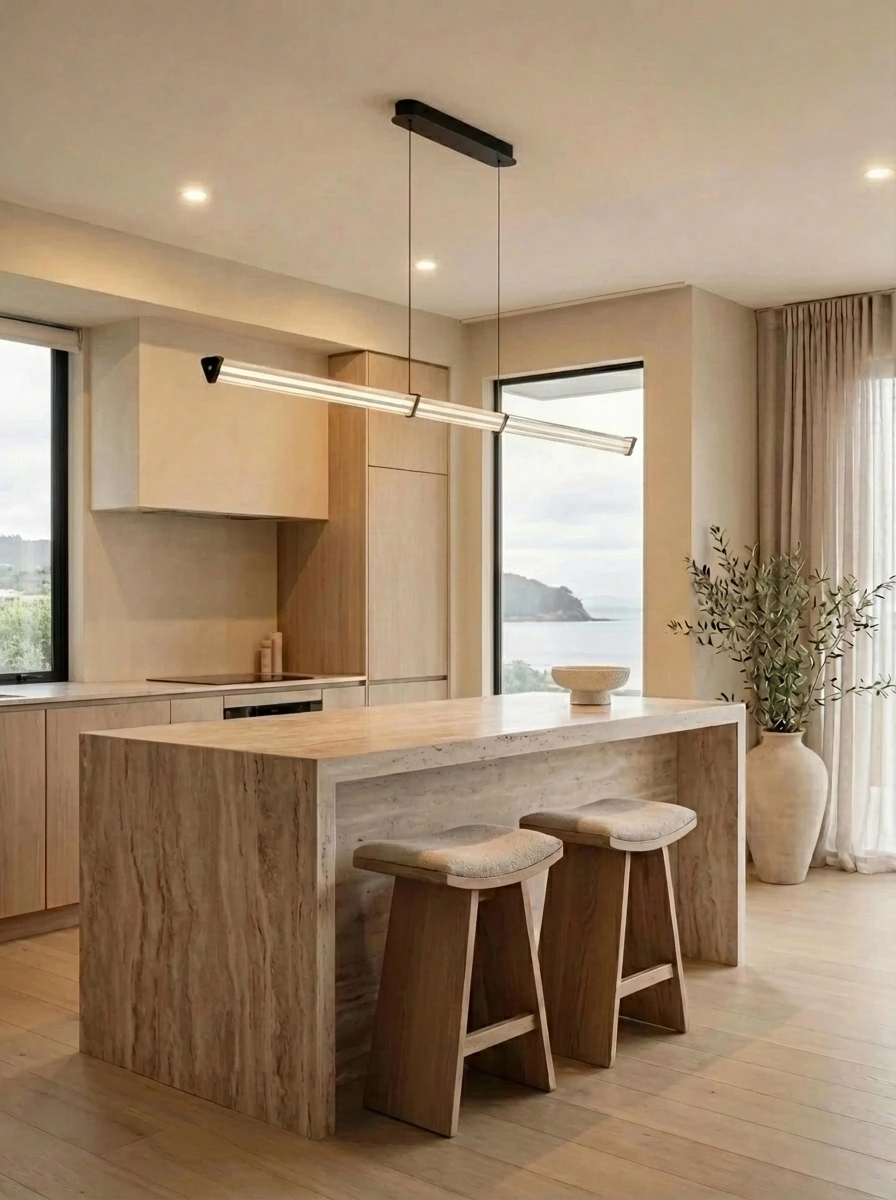
Then focus on island lighting. Statement pendants above the island define the space visually while providing focused light. For most standard islands, two or three pendants spaced evenly create balance.
Colour temperature is critical. 3000K to 4000K works well in kitchens. Too cool and the space feels clinical. Too warm and it may lack clarity for food preparation.
Well-layered kitchen lighting transforms the space from purely functional to welcoming and refined.
Living Room Lighting for Comfort
The living room must transition from daytime activity to evening relaxation. Layering is essential.
Start with soft ambient lighting from downlights or ceiling fixtures. Then add task lighting in the form of floor lamps or table lamps for reading corners.
Introduce accent lighting through wall sconces or subtle strip lighting behind shelving or media units. This creates depth and reduces reliance on bright overhead light.
Warm white lighting between 2700K and 3000K is ideal for comfort. It enhances timber, textiles and soft furnishings.
Avoid over-lighting. The goal is flexibility, not brightness alone.
Bedroom Lighting for A Restful Environment
Bedrooms should feel calm and layered, not harsh.
Begin with soft ambient lighting, often from recessed downlights or a subtle ceiling fixture. Avoid overly bright fittings.
Add bedside lighting through pendants, wall lights or table lamps positioned at eye level. This supports reading without flooding the room.
In wardrobes or walk-in closets, install LED strip lighting or small recessed lights for visibility.
Warm white lighting around 2700K to 3000K supports relaxation and helps your body wind down at night.
Layered bedroom lighting creates a sanctuary rather than a utility space.
Bathroom Lighting for Safety and Clarity
Bathrooms demand precision and compliance with safety standards.
Start with evenly spaced ceiling lighting for general brightness. Bathrooms typically require higher lumens than bedrooms due to grooming tasks.
Add vanity lighting beside or integrated into mirrors to eliminate facial shadows. Overhead-only lighting is rarely sufficient.
IP ratings matter in bathrooms. Fixtures must be suitable for wet zones.
- IP44 suits general bathroom areas.
- IP65 is recommended for areas exposed to water splashes.
Choose colour temperatures between 3000K and 4000K for a balance between warmth and clarity.
Bathroom lighting should combine safety, practicality and refinement.
Outdoor and Entry Lighting Ideas
Outdoor lighting extends your living space and improves security.
At entry points, wall lights create visibility and architectural presence. Choose fittings with appropriate IP ratings for exposure to weather.
For decks and entertaining areas, use warm white lighting around 2700K to 3000K to create a relaxed atmosphere.
Pathway lighting improves safety. Bollard lights or low-level fixtures guide movement without glare.
In coastal New Zealand conditions, choose weather-resistant materials such as powder-coated aluminium and corrosion-resistant finishes.
Outdoor lighting should balance durability and design.
Using This Home Lighting Guide to Plan Your Space
Lighting is not something to choose at the final stage of a project. It should be planned early, alongside furniture layout and electrical positioning.
To use this guide effectively:
- Identify how each room is used.
- Plan ambient, task and accent layers for every space.
- Maintain colour temperature consistency across connected areas.
- Choose fixtures scaled to the room’s size and ceiling height.
- Ensure compliance with IP and safety requirements where needed.
When you treat lighting as a design foundation rather than an afterthought, every room improves.
A well-lit home feels deliberate. It supports daily routines, enhances materials and elevates atmosphere. By applying layered lighting principles room by room, you move beyond basic functionality and create a space that feels professionally designed.
Use this room-by-room lighting guide as your blueprint. With the right plan, your lighting will not just illuminate your home. It will define it.