
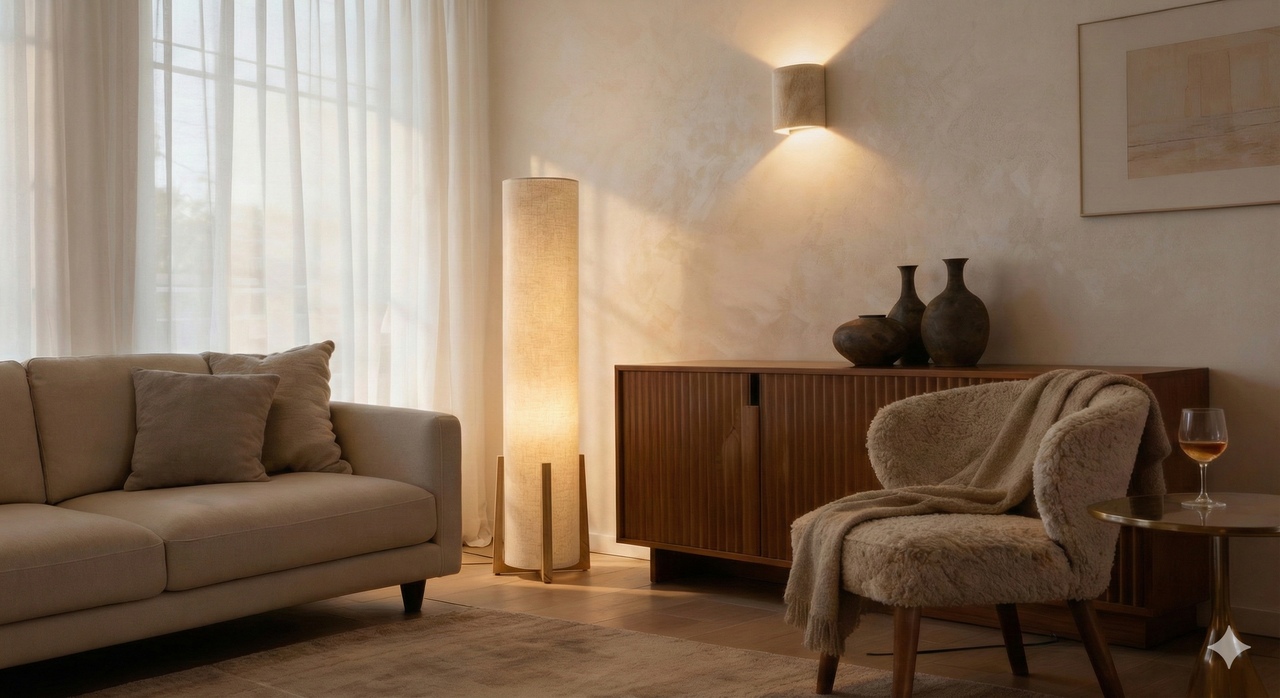
Your living room does more than one job. It is where the family gathers during the day, where guests are entertained at night, and where you might unwind with a movie or a book.
The challenge is creating lighting that adapts. A well-designed lounge should transition from bright and functional to soft and cinematic without feeling harsh or under-lit.
This guide explains how to light a living room using layered lighting, helping you combine downlights, floor lamps, wall sconces and decorative fittings into one cohesive plan.
How to Light a Living Room: Understanding Lighting Zones
Before choosing fittings, divide your living room into zones.
Most lounges include:
- A main seating or TV area
- A reading nook
- Feature walls or artwork
- Circulation areas
Each zone has different lighting needs. Instead of relying on one central ceiling light, layer your lighting to serve each function.
There are three core layers:
Ambient Lighting
General lighting that fills the room evenly, usually from downlights or ceiling fixtures.
Task Lighting
Focused light for reading or hobbies, often from floor lamps or table lamps.
Accent Lighting
Decorative or feature lighting that highlights artwork, shelving or architectural details.
Layering prevents the room from feeling flat and allows flexibility throughout the day.
Different Types of Lights for Living Rooms
A balanced living room uses multiple fixture types.
Downlights
Provide clean, even background illumination.
Floor Lamps
Perfect for reading corners or adding vertical interest.
Table Lamps
Add warmth and intimacy on side tables and consoles.
Wall Sconces
Highlight art, textured walls or fireplaces.
Pendant Lights or Statement Fixtures
Anchor the space visually in rooms with higher ceilings.
Each type plays a role. The goal is not brightness alone, but visual depth.
Living Room Lighting Ideas for Every Mood and Function
During the day, your lounge may need bright, functional lighting. In the evening, softer lighting supports relaxation.
For family time, use even ambient light combined with subtle accent lighting.
For movie nights, reduce overhead brightness and rely more on lamps and wall lights to avoid screen glare.
For entertaining, create layered warmth by combining ambient light with decorative fixtures.
Warm white lighting between 2700K and 3000K works best for living rooms. It creates comfort without sacrificing visibility.
How to Light a Living Room With No Overhead Lighting
Not every living room has ceiling wiring. If you are renting or working with limited infrastructure, you can still create effective lighting.
Use a combination of:
- Tall floor lamps in corners
- Table lamps on side tables
- Plug-in wall sconces
- LED strip lighting behind shelving or TV units
Place lamps at varying heights to avoid a single flat light source. Distribute them around the perimeter to create balance.
Even without overhead lighting, layering allows you to achieve full-room illumination.
Dimmable Lighting and Smart Control Living Room Lighting
Flexibility is essential in a living room.
Dimmable downlights allow you to shift from bright daytime lighting to softer evening ambience. Smart lighting systems let you control brightness levels or create preset scenes for activities such as reading, entertaining or watching TV.
Smart controls also improve energy efficiency and convenience, especially in open-plan homes.
When planning your lighting, ensure your fittings and control systems are compatible.
How to Choose Light for Your Living Room: Style and Scale Tips
Lighting should match your furniture and room proportions.
Consider Ceiling Height
High ceilings can support statement pendants or layered downlights. Lower ceilings may suit flush fittings and floor lamps.
Match Finishes
Metal finishes, glass shades or textured fabrics should complement existing décor.
Balance Scale
Oversized lamps in small rooms overwhelm the space. Tiny fittings in large lounges feel lost.
Lighting is part of the design, not just the utility. It should enhance the aesthetic rather than compete with it.
What Wattage or Brightness Works Best for Living Rooms
Instead of focusing on watts, focus on lumens. Watts measure energy use. Lumens measure brightness.
As a guide:
- Aim for around 100 to 150 lumens per square metre for general living room lighting.
- Add focused lighting in reading areas.
For example, a standard 20 square metre lounge may require around 2000 to 3000 lumens of ambient light, distributed across multiple fittings.
Avoid over-lighting. Excess brightness reduces comfort and flattens atmosphere.
Decorative Living Room Lighting Ideas
Decorative lighting adds personality.
- Sculptural floor lamps create focal points.
- Wall sconces frame artwork.
- LED strip lighting behind shelves adds subtle glow.
- Statement pendants draw attention in rooms with height.
Layer decorative elements with functional lighting to achieve both beauty and practicality.
Light Up Your Living Room
Lighting transforms how your living room feels. By layering ambient, task and accent lighting, you create flexibility that supports daily life and evening relaxation.
Use warm tones for comfort, distribute light across zones, and choose fittings that suit your room’s scale and style.
When lighting is planned intentionally, your lounge transitions effortlessly from bright family hub to relaxed retreat.
Living Room Lighting FAQs
What is the best way to light a living room?
The best approach is layered lighting. Combine ambient ceiling light, task lighting such as floor lamps, and accent lighting to highlight features. This allows flexibility for different activities.
What is the best light for a cozy living room?
Warm white lighting between 2700K and 3000K creates a comfortable, inviting atmosphere. Soft layers of light at different heights enhance the effect.
How many lights should be in a living room?
There is no fixed number. Instead of counting fittings, aim to cover all zones with layered light sources. Most living rooms benefit from a mix of ceiling lights and at least two additional lamp or wall light sources.