
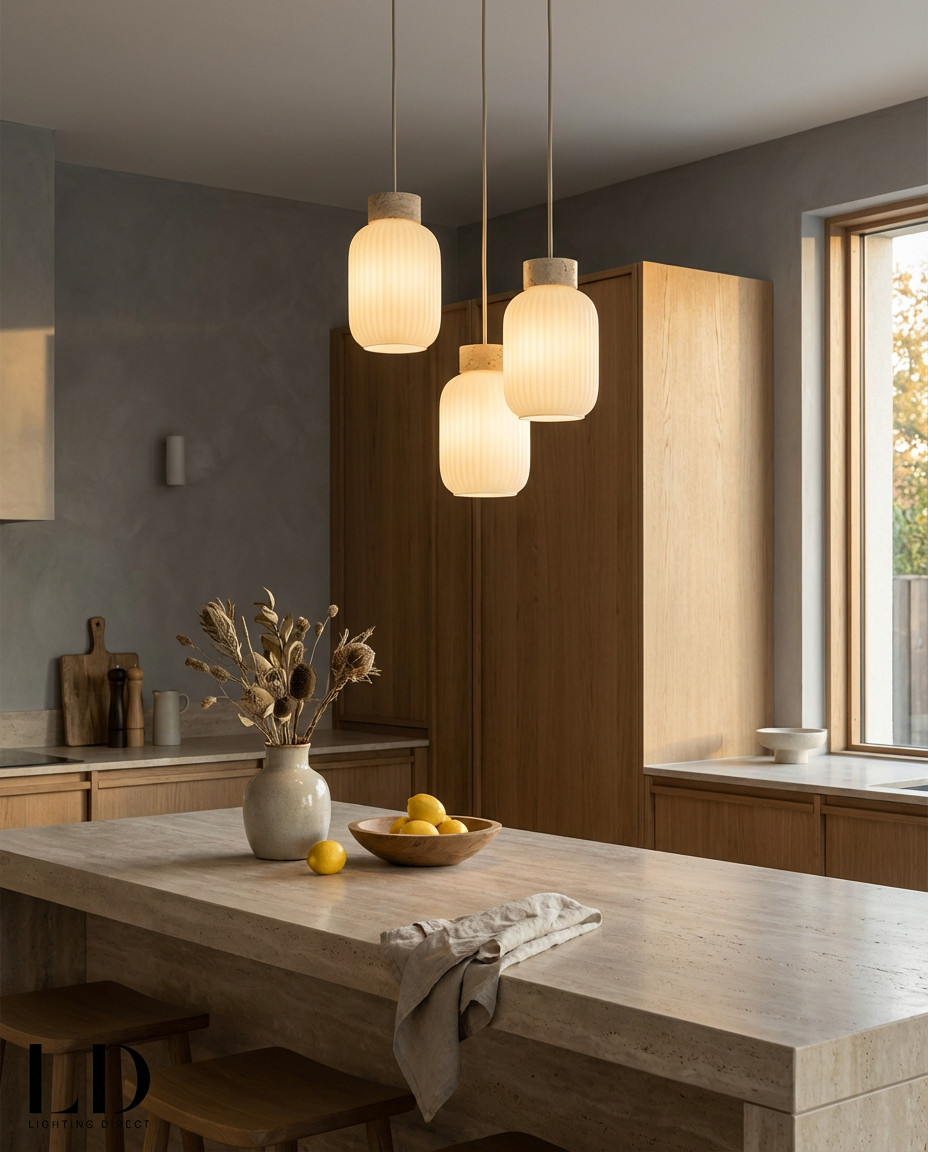
The kitchen is the hardest working room in your home. It is where you prepare meals, host guests, help with homework and move constantly between tasks. Lighting in this space cannot be an afterthought.
Good kitchen lighting blends function and style. It removes shadows from work surfaces, highlights your island bench, and creates a welcoming environment for everyday living.
This guide explains how to light a kitchen properly using layered lighting, covering pendants, downlights and LED strip lighting so you can get it right the first time.
How to Light a Kitchen: Planning Your Lighting Areas
Lighting a kitchen starts with understanding how the space is used. A single ceiling fitting is not enough. Kitchens require layers.
There are three core lighting types:
Ambient Lighting
This is your general background light, usually from downlights or ceiling fixtures. It ensures the whole room is evenly illuminated.
Task Lighting
This is focused light over preparation zones such as benchtops, sinks and cooktops. It eliminates shadows and improves visibility.
Accent Lighting
This highlights features such as splashbacks, shelving or island benches. It adds depth and visual interest.
When you combine all three layers, your kitchen feels balanced rather than flat or overly bright.
How Much Kitchen Lighting Do I Need: Sizing and Placement Basics
One of the most common questions is how much kitchen lighting is enough.
A practical guideline is to aim for around 300 to 400 lumens per square metre for general kitchen lighting. This ensures adequate brightness without glare.
Placement matters more than raw brightness.
- Space downlights evenly across the ceiling.
- Avoid placing lights directly behind you where your body will cast shadows on the bench.
- Position lighting slightly forward over preparation areas.
Over-lighting can make a kitchen feel clinical. Under-lighting creates frustration and unsafe work conditions. Balance is key.
Kitchen Island Lighting Guide: Choosing the Right Fixtures
The island bench is often the visual centrepiece of the kitchen. Lighting here needs to be both practical and stylish.
When choosing island lighting, consider:
Height
Pendants should typically hang 700 to 900mm above the bench surface. This keeps sightlines clear while providing focused light.
Spacing
Allow around 600 to 700mm between pendants. For most standard islands, two or three pendants work best.
Scale
Large islands suit statement pendants. Smaller islands require more compact fittings to avoid visual clutter.
Island lighting should create a defined zone while still blending with your overall kitchen design.
Selecting the Right Kitchen Lighting Colours
Colour temperature affects how your kitchen feels and functions.
- 3000K Warm White creates a softer, more welcoming atmosphere.
- 4000K Natural or Cool White enhances clarity and works well in task-heavy kitchens.
In most modern New Zealand homes, 3000K to 4000K is ideal. Avoid overly cool tones in open-plan kitchens connected to living areas, as this can make the space feel disconnected.
Consistency matters. Mixing very warm and very cool lighting in the same room often feels unbalanced.
Kitchen Pendant Light Guide: Style and Scale for Your Space
Pendants are not just decorative. They shape the mood of the kitchen.
When selecting pendants:
Match the Style to Your Materials
Timber kitchens pair well with warm metals and textured finishes. Modern kitchens suit clean lines and matte finishes.
Consider Visual Weight
Heavy, dark pendants create bold statements. Glass or lighter finishes feel more subtle.
Think in Groups
Odd numbers often look balanced over longer benches.
The goal is to complement your cabinetry and benchtop materials rather than compete with them.
Task Lighting Essentials: Under-Cabinet, Recessed and Strip LEDs
Task lighting prevents shadows on work surfaces.
Under-Cabinet LED Strip Lighting
Installed beneath upper cabinets, strip lighting illuminates benchtops evenly and eliminates overhead shadow.
Recessed Downlights
Positioned correctly, they provide strong ambient lighting.
Integrated Shelf Lighting
Adds subtle glow while increasing visibility.
Under-cabinet lighting is often overlooked, yet it has one of the biggest impacts on functionality. It ensures precision when preparing food and enhances the overall layered effect.
How to Change Kitchen Light Fixtures Safely
Replacing a kitchen light fitting should always prioritise safety.
- Turn off power at the switchboard, not just the wall switch.
- Confirm power is fully isolated.
- Remove the existing fitting carefully.
- Install the new fitting according to manufacturer instructions.
In New Zealand, hardwired lighting installations must be completed by a licensed electrician. This protects your home and ensures compliance with electrical regulations.
Refresh Your Kitchen with Kitchen Lighting Upgrades
Upgrading your kitchen lighting does not always require a full renovation. Adding pendant lighting over the island, upgrading to modern downlights, or installing under-cabinet LED strips can completely transform how the space looks and functions.
Layered lighting creates depth. It improves safety and makes the kitchen feel intentional rather than purely practical.
When you balance ambient, task and accent lighting correctly, your kitchen becomes more than a workspace. It becomes the central hub of your home, performing beautifully day and night.
Kitchen Lighting FAQs
What is the rule of thumb for kitchen lighting?
Use layered lighting. Combine ambient downlights, focused task lighting over benches, and feature pendants over the island. Aim for approximately 300 to 400 lumens per square metre for general brightness.
Is 3000K or 4000K better for kitchen?
3000K offers a warmer, more relaxed feel. 4000K provides clearer visibility for task-heavy kitchens. In open-plan homes, 3000K to 3500K often provides the best balance.
What are some common kitchen lighting mistakes?
Common mistakes include relying on a single ceiling light, placing downlights behind work zones, mixing inconsistent colour temperatures, and choosing pendants that are too small or too large for the island.