
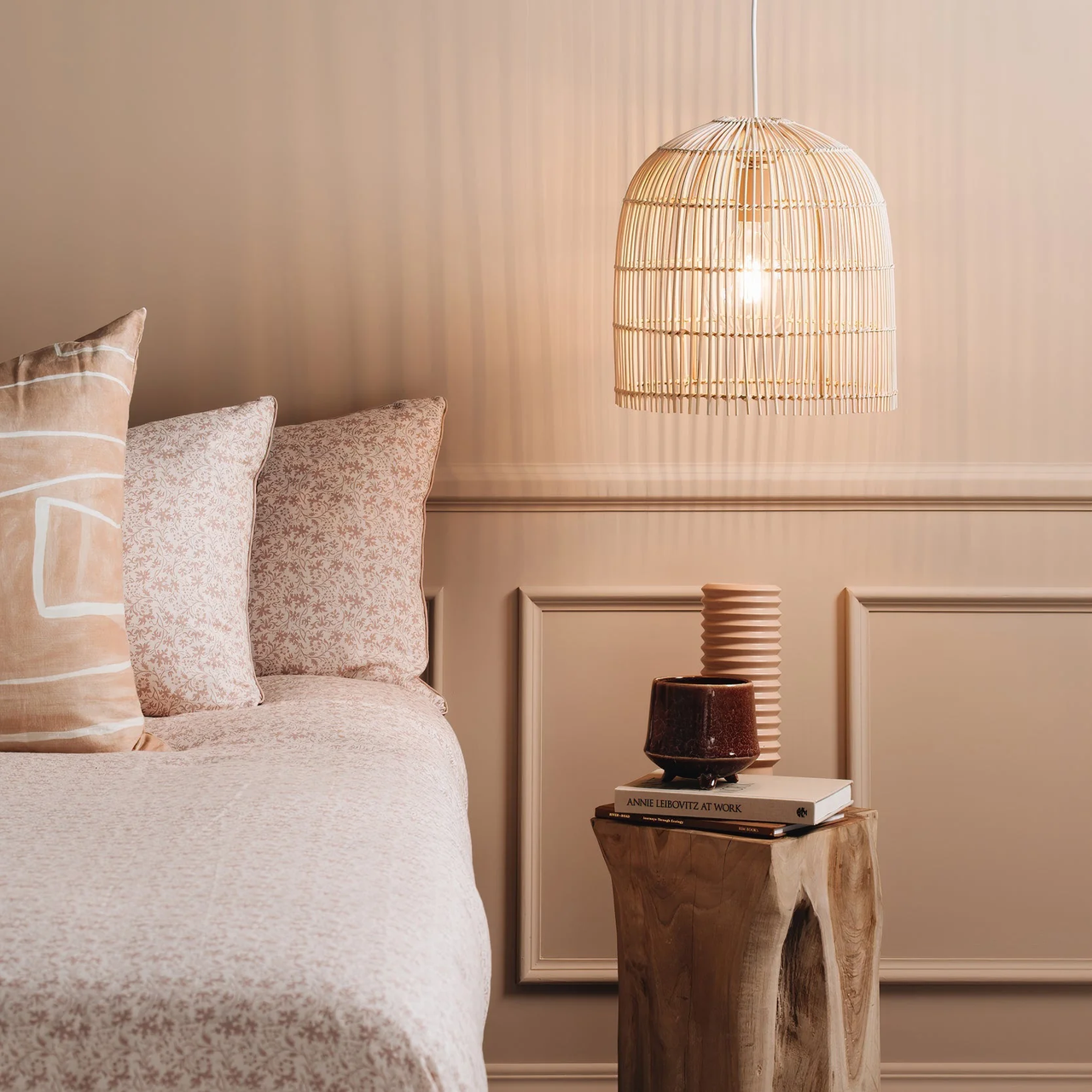
Your bedroom should feel like a retreat. It is the one space in your home dedicated to rest, privacy and recovery. Yet many bedrooms are still lit with a single ceiling fitting that does nothing to support relaxation or comfort.
If you want to improve bedroom lighting properly, you need to think beyond one light source. The key is layered lighting. When designed well, layered lighting allows your bedroom to shift from bright and functional in the morning to soft and calming at night. It improves how the room looks, how it feels, and how well you sleep.
This guide explains how to light a bedroom properly, which LED lights are best for bedrooms, what colour light supports sleep, and how to combine pendants, lamps and strip lighting into one cohesive plan.
How Layered Lighting Improves the Bedroom
Layered lighting means combining multiple light sources at different heights and intensities. In a bedroom, this is essential because the room serves more than one purpose.
There are three core layers
Ambient Lighting
This is your general background lighting, usually from a ceiling fixture or recessed downlights. It ensures the room is evenly illuminated when needed.
Task Lighting
This provides focused light for reading, getting dressed or applying makeup. It is usually delivered through bedside lamps, wall lights or pendants.
Accent Lighting
This adds atmosphere. It may include strip lighting behind a headboard, soft wardrobe lighting or subtle wall features.
When you rely on a single ceiling light, the room feels flat and harsh. When you layer lighting, you create depth, comfort and flexibility.
Bedroom Lighting Ideas for Every Area
To improve bedroom lighting, break the room into zones.
The Bed Area
This is the most important zone. Bedside lighting should allow you to read comfortably without flooding the entire room with brightness.
Options include
- Hanging bedside pendants
- Wall-mounted reading lights
- Table lamps with fabric shades
Lighting should sit around eye level when seated to prevent glare.
Wardrobes and Walk-In Closets
Clothing selection requires clarity. LED strip lighting inside wardrobes or small recessed lights above hanging rails make a significant difference.
Choose a slightly neutral white tone for wardrobes if you want accurate colour representation of clothing.
Reading Corners
If you have space for a chair or small nook, a floor lamp creates a defined retreat area within the room.
Feature Walls
Subtle wall lighting can highlight textured finishes, artwork or architectural details, adding sophistication without overwhelming the space.
Dividing the room into lighting zones improves both functionality and visual appeal.
What Type of Light Bulb Works Best in Bedrooms
When selecting LED bulbs for bedrooms, ignore watts and focus on lumens and colour temperature.
Watts measure energy usage. Lumens measure brightness.
For general bedroom lighting, aim for approximately 100 to 150 lumens per square metre. This ensures the room feels bright enough in the morning but not clinical.
LED bulbs are the best choice for bedrooms because they
- Use less energy
- Last longer
- Offer precise colour temperature options
Choose bulbs with a high colour rendering index so skin tones and fabrics appear natural rather than washed out.
What Colour Light Is Best for Sleep and Relaxation
Colour temperature plays a major role in how your brain responds to light.
For bedrooms, 2700K to 3000K warm white is ideal. This produces a soft golden tone similar to late afternoon sunlight.
Lower Kelvin temperatures reduce blue light exposure. Blue light stimulates alertness, which is useful during the day but counterproductive at night.
Using warm white lighting in the evening helps signal to your body that it is time to wind down. Cool white lighting above 4000K is better suited to offices or task-heavy environments.
If your bedroom connects to an ensuite or walk-in wardrobe, keep the lighting consistent so the transition feels cohesive.
How To Create Layered Lighting in the Bedroom
Start with your ambient layer. This might be recessed downlights or a central ceiling fixture. Ensure even spacing so there are no dark patches.
Next, introduce bedside task lighting. Position it carefully so the light falls directly onto your book or lap without shining into your partner’s eyes.
Then add accent lighting. Examples include:
- LED strip lighting behind the bedhead
- Soft lighting inside wardrobes
- Subtle floor-level lighting
The key principle is flexibility. Not every light needs to be on at once. Layering allows you to create combinations suited to different times of day.
Morning might require ambient plus wardrobe lighting. Evening might use only bedside lamps.
Bedside Lighting Options: Pendants, Lamps and Wall Lights
Bedside lighting is both functional and decorative.
Bedside Pendants
Suspended pendants free up bedside table space and create a modern, hotel-style aesthetic. Ensure they hang low enough to provide useful light but high enough to avoid obstruction.
Table Lamps
Traditional but effective. Lamps with fabric shades diffuse light softly, reducing glare.
Wall Lights
Ideal for compact bedrooms where space is limited. They provide focused lighting without taking up surface area.
When choosing bedside lighting, consider scale. Oversized pendants in small rooms feel overwhelming. Tiny lamps in large rooms look lost.
Balance proportion with practicality.
Create a Layered Lighting Bedroom in Your Home
A well-lit bedroom is not defined by brightness alone. It is defined by balance.
By combining ambient lighting for general use, task lighting for practical needs and accent lighting for mood, you create a space that adapts to your lifestyle.
Choose warm white LED bulbs between 2700K and 3000K to support sleep. Position bedside lighting thoughtfully. Add subtle wardrobe and feature lighting to elevate the space.
When layered properly, bedroom lighting transforms your room into a sanctuary. It supports rest, enhances style and improves everyday comfort without feeling harsh or overdesigned.