The Simple Guide to Choosing the Right Bulb
Choosing a light bulb should be simple, but for many people it feels anything but. Walk into a store or browse online and you are suddenly hit with terms like E27, E14, lumens, kelvin, LED equivalents, warm white, cool white, and wattage conversions. It is no surprise that customers often worry about buying the wrong bulb.
At Lighting Direct, we deal with light bulb types every day. This guide strips away the jargon and explains the different types of light bulbs in plain English, so you can buy with confidence, especially when shopping online. By the end of this guide, you will know exactly which bulb you need, where it works best, and how to choose the best light bulb type for every room in your home.
Why light bulb choice actually matters
Light does more than help you see. The wrong bulb can make a space feel dull, harsh, or uncomfortable, while the right one can completely transform a room. Using the correct bulb also improves energy efficiency, reduces eye strain, and ensures your fittings last longer. Getting it right the first time saves money, time, and frustration.
Understanding light bulb socket sizes, E27 vs E14
One of the most common points of confusion is socket size. This is simply the base of the bulb that screws into the fitting.
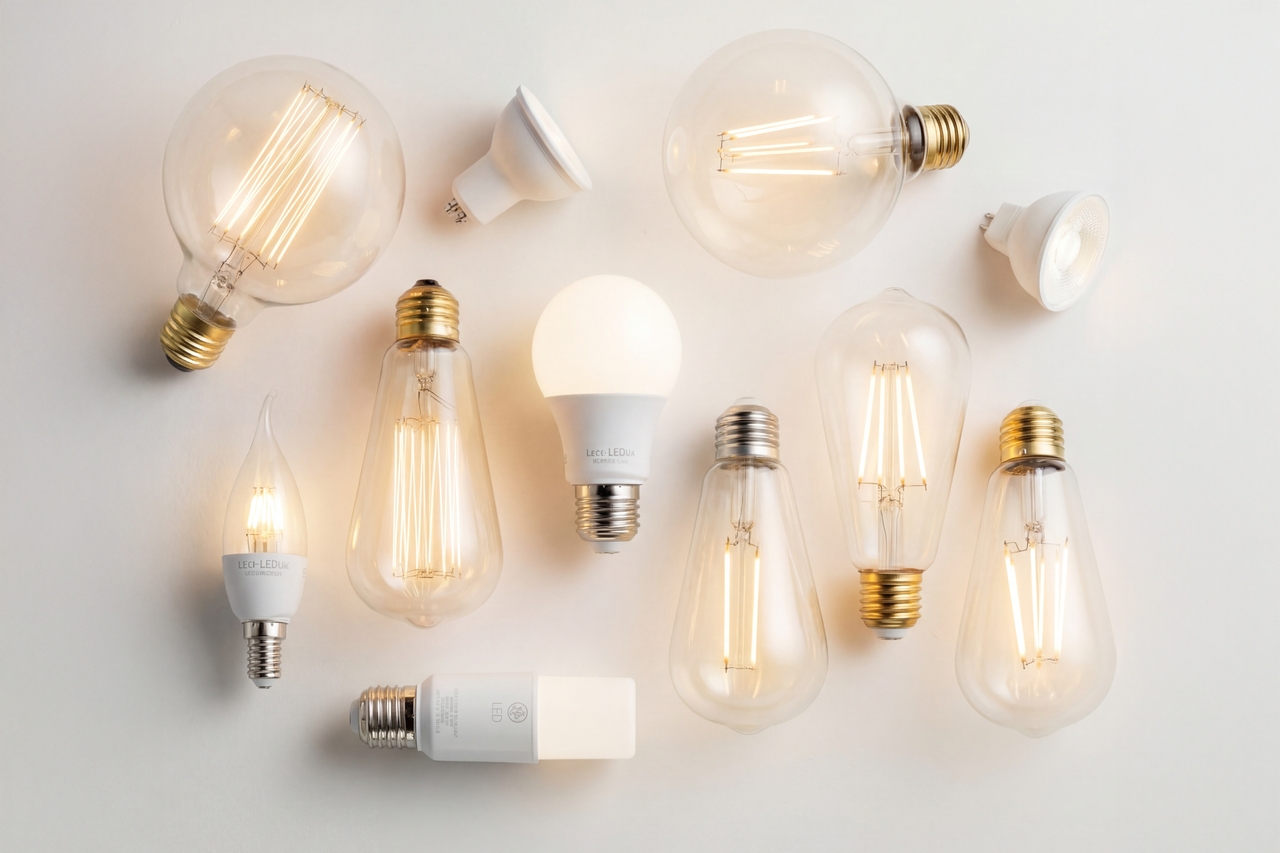
E27 is the most common household bulb in New Zealand. It has a larger screw base and is used in most lamps, pendants, and ceiling fittings. If you think of a “standard” light bulb, it is almost always E27.
E14 is a smaller screw base, often called a small Edison screw. These bulbs are commonly used in decorative fittings, wall lights, bedside lamps, and chandeliers. They are slimmer and usually designed for lower wattage or softer lighting.
The key rule is simple. If the bulb does not physically fit into the socket, it will not work. Always check whether your fitting is E27 or E14 before buying. This alone eliminates most incorrect purchases.
Light bulb Wattage vs LED, why the numbers changed
In the past, people chose bulbs based on wattage. A 60W bulb meant bright, a 40W bulb meant softer light. With LED technology, wattage no longer measures brightness. It measures energy use.
LED bulbs use far less power to produce the same amount of light. This is why wattage-to-LED conversions matter.
As a rough guide:
A traditional 40W bulb equals about 400 to 470 lumens in LED.
A traditional 60W bulb equals about 800 lumens in LED.
A traditional 75W bulb equals about 1100 lumens in LED.
A traditional 100W bulb equals about 1600 lumens in LED.
When choosing between different types of light bulbs, always look at lumens for brightness, not watts.
What are lumens, and how many do you need?
Lumens measure how bright a bulb is. The higher the lumens, the brighter the light.
For general guidance:
Bedrooms usually need softer lighting, around 400 to 800 lumens per bulb.
Living areas often sit between 600 and 1000 lumens.
Kitchens and workspaces need brighter light, usually 800 to 1200 lumens.
Bathrooms vary depending on the area, with vanity lighting often needing higher brightness.
Choosing the right lumen level is essential when deciding the best light bulb type for each room.
Light bulb colour temperature explained simply
Colour temperature is measured in kelvin, but you do not need to memorise numbers. Think of it like this.
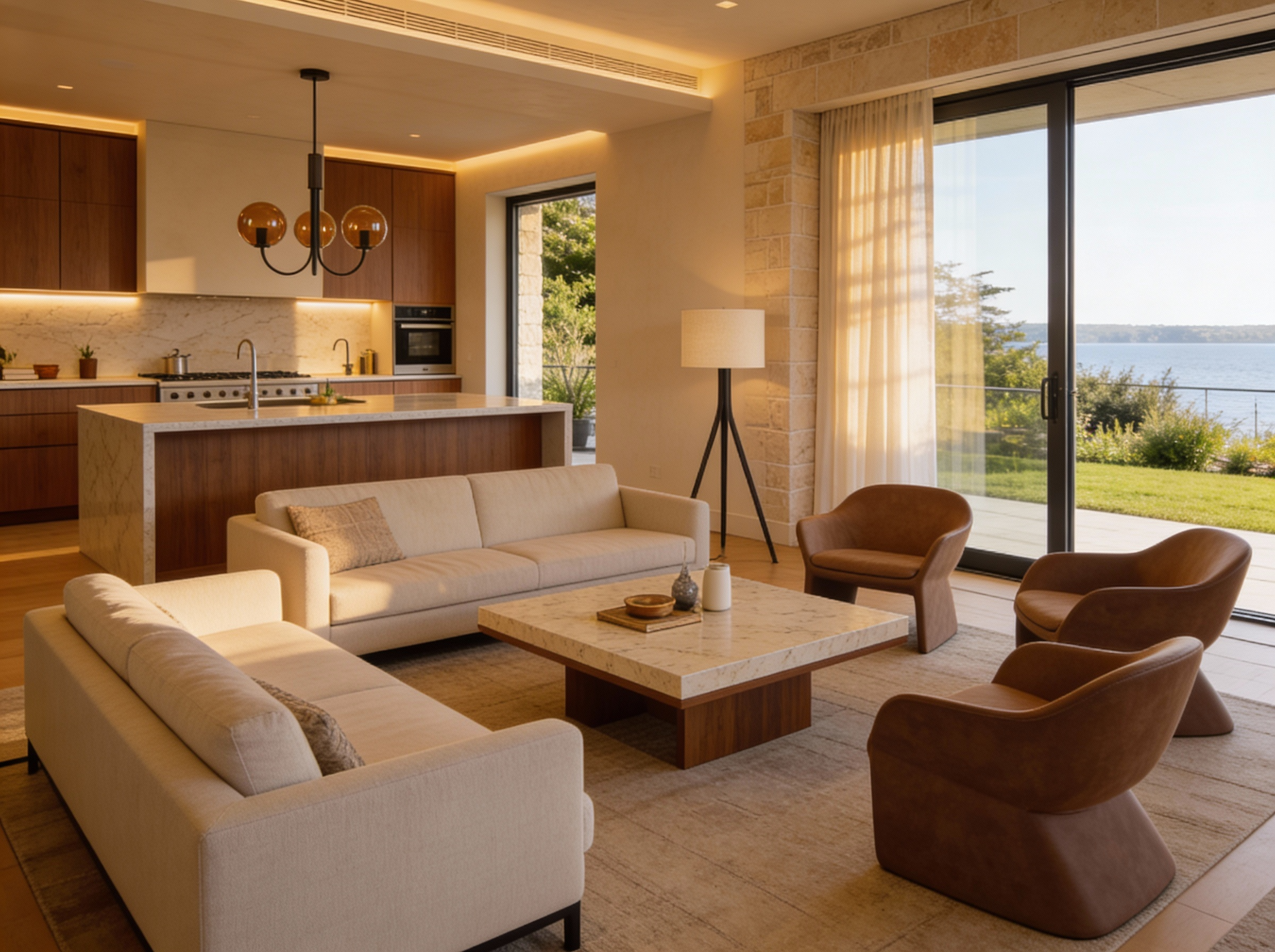
Warm white feels cosy and relaxed. It has a yellow or soft glow and is ideal for bedrooms and living areas.
Neutral white is balanced and clean. It suits kitchens and bathrooms where clarity matters.
Cool white or daylight is crisp and bright. It works well in offices, garages, and task-focused spaces.
The colour of light has a huge impact on how a room feels. Even the best light bulb type can feel wrong if the colour temperature is not suited to the space.
Best Light bulb types for different rooms
Best light bulb type for bedroom spaces
The best light bulb type for bedroom use is usually an LED bulb with warm white colour temperature. E27 bulbs are common for ceiling lights and lamps, while E14 bulbs are often used in bedside or wall lights.
Look for lower to medium lumens to avoid harsh lighting, and consider dimmable bulbs if your fitting allows it. Bedrooms should feel calm, not clinical.
Best light bulb type for kitchen areas
Kitchens need clarity and brightness. The best light bulb type for kitchen spaces is typically an LED bulb with neutral white light. This helps you see true colours when cooking and preparing food.
Higher lumens are important here, especially over benches and work areas. E27 bulbs are common in ceiling fittings, while E14 bulbs may appear in feature pendants or cabinetry lighting.
Best light bulb type for bathroom use
Bathrooms need functional lighting with a clean feel. The best light bulb type for bathroom areas is an LED bulb with neutral to cool white light, depending on preference.
Vanity areas benefit from brighter bulbs so grooming tasks are easier. Always check that the bulb is suitable for bathroom fittings, especially in areas exposed to moisture.
Decorative bulbs vs functional bulbs
Not all bulbs are about pure brightness. Decorative bulbs are designed to be seen. Filament-style LED bulbs, globe shapes, and vintage designs fall into this category.
These bulbs still use LED technology but focus more on appearance than raw lumen output. They are perfect for feature pendants, open fittings, and statement lighting, while functional bulbs are better for task areas.
Why LED lightbulbs are the best all-round choice
Across all light bulb types, LED is the clear winner. LEDs last significantly longer than traditional bulbs, use far less energy, and come in a wide range of shapes, brightness levels, and colours.
Whether you are choosing the best light bulb type for bedroom comfort, kitchen efficiency, or bathroom clarity, LED offers the most flexibility and value.
Buying light bulbs online with confidence
Buying bulbs online can feel risky if you are unsure what you need. That is why understanding the basics matters. Check the socket size first, then choose the right lumens for brightness, and finally select the colour temperature that suits the space.
At Lighting Direct, our range is curated to cover all common types of light bulbs used in New Zealand homes. Our product descriptions are written to guide you clearly, so you are never guessing.
Our final thoughts on choosing the best light bulb
Understanding different types of light bulbs does not require technical knowledge, just the right information. Once you know the difference between E27 and E14, understand lumens instead of watts, and choose colour temperature with purpose, everything clicks into place.
This simple guide is designed to remove uncertainty and help you feel confident every time you choose a bulb. When you know what to look for, you will never buy the wrong bulb again, and your home will always be lit exactly the way it should be.
Choosing the right light bulb overview
- Always check the socket size first, E27 for standard fittings and E14 for smaller decorative fittings.
- Choose brightness based on lumens rather than watts, as LEDs use far less power for the same light output.
- Match colour temperature to the room, warm white for relaxing spaces, neutral white for kitchens and bathrooms.
- Use higher lumens for task areas like kitchens and vanities, lower lumens for bedrooms and living spaces.
- Choose LED bulbs for longer life, lower energy use and the widest range of styles and applications.